Flat Rack Shipping Containers: Uses and Buying Guide
Learn how flat rack shipping containers handle oversized and heavy cargo, their common uses and what buyers should inspect before purchasing.
Flat Rack Shipping Containers: Uses, Benefits and Buying Guide
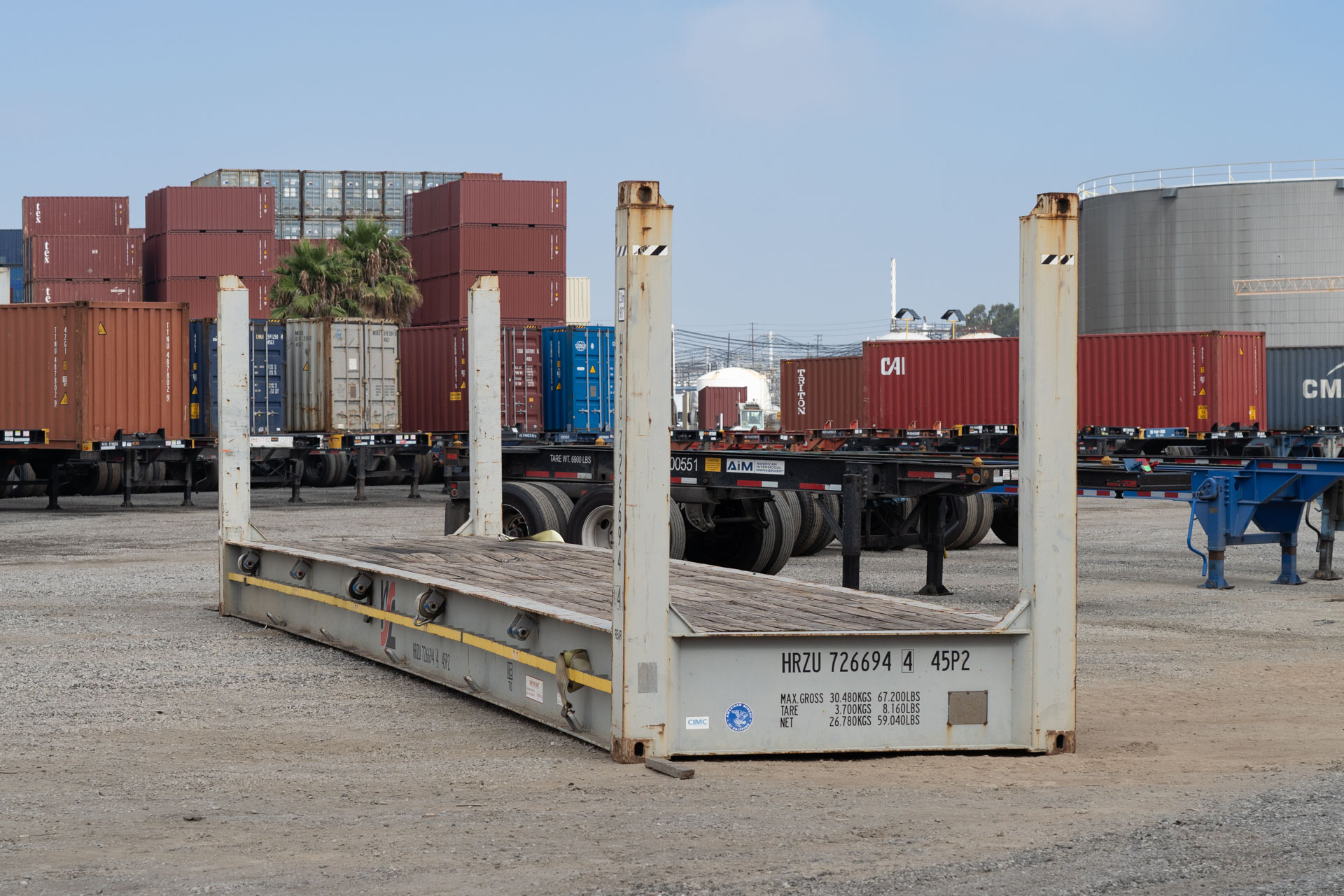
Flat rack shipping containers are designed for cargo that cannot fit safely inside a standard enclosed container. Because they do not have a permanent roof or full-length side walls, flat racks provide open access for loading oversized, heavy and unusually shaped cargo.
They are commonly used in construction, agriculture, manufacturing, transportation and other industries that need to move or store large equipment and materials.
Explore Cargo Vault’s available Flat Rack Containers to compare sizes, conditions and suitable options for your project.
What Is a Flat Rack Shipping Container?
A flat rack container consists of a reinforced steel cargo deck with strong end walls. Depending on the model, the end walls may be fixed or collapsible.
The container’s corner posts and multiple lashing points allow suitable cargo to be positioned and secured. Flat rack containers are typically available in 20ft and 40ft lengths, although inventory and exact specifications may vary.
Unlike a standard shipping container, a flat rack does not have full side walls or a permanent roof. This open design allows cargo to be loaded from above or from either side using cranes, forklifts and other suitable lifting equipment.
Common Uses for Flat Rack Containers
Flat racks are commonly used for cargo that is too wide, tall, heavy or irregularly shaped to pass through standard container doors.
Typical uses include:
- Construction machinery
- Agricultural equipment
- Industrial equipment
- Vehicles and boats
- Steel beams and pipes
- Timber and building materials
- Generators and large tanks
- Heavy manufacturing components
- Oversized cargo extending beyond standard dimensions
Before loading, always confirm the cargo’s dimensions, estimated weight, lifting points and securing requirements.
Main Benefits of Flat Rack Containers
Open-Side and Top Loading Access
The open design allows cranes and suitable lifting equipment to load cargo from above or from the sides.
This can make it easier to position large machinery, long materials and irregularly shaped equipment than attempting to load them through standard shipping container doors.
Suitable for Oversized Cargo
Some cargo may extend above or beyond the sides of the flat rack when it has been properly planned and secured.
However, out-of-gauge cargo may require specialized transportation arrangements, permits or route planning. The applicable requirements should be confirmed before loading or transporting the unit.
Strong Cargo Platform
Flat racks are built with reinforced steel platforms designed for demanding cargo applications.
However, every container has a specific maximum gross weight, payload capacity and load-distribution requirement. These limits must never be exceeded.
The cargo weight should be distributed carefully across the deck to avoid overloading individual sections of the container.
Multiple Cargo-Securing Points
Flat rack containers normally include lashing points that can be used to secure appropriate cargo.
Chains, straps, braces and other securing equipment should be selected according to the cargo type, weight and intended transportation method. Qualified professionals should supervise the securing of heavy or oversized loads.
Collapsible Storage Options
Some flat rack containers have collapsible end walls. When empty, several compatible units may be stacked to reduce the space required for storage or return transportation.
Availability varies, so confirm whether the unit has fixed or collapsible ends before purchasing.
Flat Rack vs. Open-Top vs. Standard Container
The right container type depends on the cargo’s dimensions, required loading method and need for protection.
| Container Type | Best Suited For | Loading Access | Level of Enclosure |
| Flat rack | Cargo that is too wide, tall or irregularly shaped | Top and sides | Open |
| Open-top container | Tall cargo that fits between full side walls | Doors and removable top | Partially enclosed |
| Standard container | General storage and cargo that fits through the doors | Cargo doors | Fully enclosed |
A flat rack is generally the better choice when the cargo is too wide as well as too tall for an enclosed container.
An open-top container retains its steel side walls and cargo doors while allowing overhead loading through a removable roof covering. If your cargo fits between full side walls, compare Cargo Vault’s Open-Top Containers.
For tools, furniture, business inventory and other items that require full enclosure, explore available 40ft Shipping Containers.
Choosing Between a 20ft and 40ft Flat Rack
The correct size depends on the length, width, height and weight of the cargo.
20ft Flat Rack
A 20ft flat rack may be suitable for compact but heavy items, including:
- Small construction machinery
- Industrial components
- Vehicles
- Generators
- Heavy equipment that does not require a 40ft platform
Its shorter length may make it easier to position in locations with restricted space. However, cargo dimensions and weight distribution must still be checked carefully.
40ft Flat Rack
A 40ft flat rack provides a longer loading platform for:
- Long machinery
- Steel beams
- Pipes
- Timber
- Large vehicles
- Boats
- Multiple compatible cargo items
- Oversized industrial equipment
A larger unit requires more delivery, loading and maneuvering space. The site and access route should be reviewed before ordering.
What Should You Inspect Before Buying?
The condition of a flat rack should be carefully evaluated, especially when purchasing a used unit.
Inspect the following areas:
- Cargo deck
- Corner posts
- End walls
- Locking mechanisms
- Hinges on collapsible models
- Lashing points
- Structural welds
- Lower rails
- Corner castings
Look for serious corrosion, cracks, distortion, damaged welds or other problems that may affect the unit’s strength or safe use.
Confirm the container’s identification details, rated capacity, tare weight, payload limit and condition. If the flat rack will be used for transportation, verify that it meets all applicable inspection, certification and carrier requirements.
Budget-conscious buyers can also compare Cargo Vault’s Used Shipping Containers.
Plan the Loading Process Carefully
Before loading a flat rack, prepare a plan covering the cargo’s weight, dimensions, center of gravity and lifting method.
Important considerations include:
- The total weight of the cargo
- Weight distribution across the platform
- Safe crane or forklift capacity
- Approved lifting points
- Lashing and bracing requirements
- Side and overhead clearance
- Weather exposure
- Protection for sensitive cargo
- Transportation restrictions
Heavy machinery and irregularly shaped equipment may have an uneven center of gravity. This must be considered when lifting and positioning the cargo.
Qualified professionals should manage lifting, weight distribution and cargo securing.
Consider Weather Protection
Flat racks do not provide the same weather protection as enclosed shipping containers.
Cargo may be exposed to:
- Rain
- Wind
- Sunlight
- Dust
- Road debris
- Moisture
- Temperature changes
Weather-resistant covers, protective wrapping or customized crating may be required. The protection method must be properly secured and should not interfere with lifting or transportation.
If the cargo needs full protection from the weather, a standard enclosed container or open-top container may be more appropriate.
Prepare the Delivery Site
The delivery and loading site should provide firm ground, adequate clearance and safe access for the required truck or lifting equipment.
Before delivery, check for:
- Narrow gates
- Overhead power lines
- Trees and low branches
- Buildings and fences
- Soft or unstable ground
- Sharp turns
- Parked vehicles
- Insufficient crane clearance
- Restricted loading areas
Provide the supplier with the delivery location, cargo dimensions, estimated weight, preferred container size and planned loading method.
Review Cargo Vault’s delivery information when preparing your site.
Important Questions to Ask Before Ordering
Before purchasing a flat rack container, ask:
- What are the exact dimensions of the cargo?
- What is the estimated total weight?
- Does the cargo exceed the platform’s width or height?
- Is a 20ft or 40ft platform required?
- Are fixed or collapsible end walls preferred?
- How will the cargo be lifted?
- What securing equipment will be required?
- Does the cargo need weather protection?
- Is there sufficient space for delivery and loading?
- Are permits or specialized transportation arrangements required?
- Will the container be used for storage or transportation?
- Does the unit require current inspection or certification?
Providing this information early can help prevent incorrect sizing, delivery delays and unexpected transportation costs.
Request a Flat Rack Container Quote
Cargo Vault Containers can help you compare available flat rack sizes, conditions and configurations.
Request a flat rack container quote with your delivery location, cargo dimensions, estimated weight, loading method and preferred container size. This information will help the team identify an appropriate unit for your project.