
How to Inspect a Used Shipping Container Before Buying
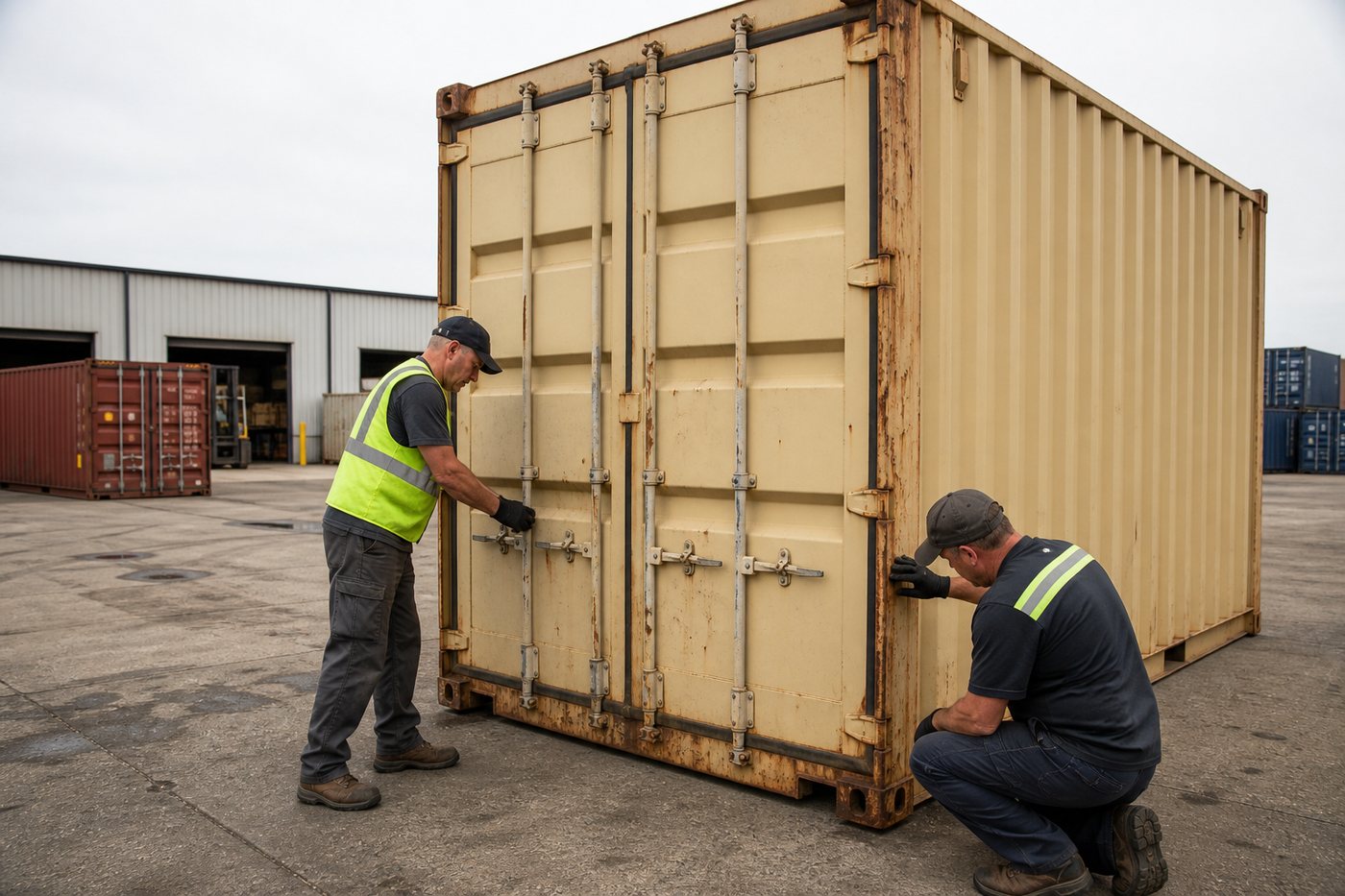
Buying a used shipping container? Follow this inspection checklist to evaluate its structure, roof, doors, floor, seals and overall condition before purchasing.
Buying a used shipping container can be a practical way to obtain secure storage, create a workshop or begin a conversion project. However, containers can vary considerably in age, previous use and overall condition.
Before purchasing, inspect the container carefully or request detailed photographs and a condition report. A container that appears acceptable from a distance may still have roof leaks, damaged door seals, corrosion, twisted framing or flooring problems.
This checklist explains what to inspect before buying a used shipping container and which questions to ask the seller.
Understand the Container’s Condition
Start by confirming how the seller describes the container.
Common descriptions include:
Cargo-Worthy
A cargo-worthy container is generally expected to have sufficient structural integrity for freight transportation, subject to inspection and applicable certification requirements.
If the container will be used for international transportation, confirm its current examination status and acceptance requirements with the shipping line or carrier.
Wind and Watertight
A wind-and-watertight container should protect stored items from normal wind and rain when its doors are properly closed.
This description does not necessarily mean that the container is certified for international shipping.
As-Is
An as-is container may have significant rust, damaged doors, holes, flooring problems or structural defects. These containers may be appropriate for repairs or certain conversion projects, but the buyer should clearly understand the required work before purchasing.
One-Trip
A one-trip container has normally completed a limited initial shipping journey after manufacture. It will generally have less wear than an older used container, although it should still be inspected.
If you are uncertain about the appropriate condition, review the Cargo Vault Shipping Container Buyer’s Guide.
1. Confirm the Container’s Size and Identification
Verify that the container matches the size and type stated in the listing or quotation.
Check:
- Container length
- Standard-height or High Cube configuration
- Standard, double-door, open-side or another specialized design
- Container identification number
- Manufacturer information
- Maximum gross weight markings
- Safety Approval Plate, when applicable
The identification number should be visible on the container and should correspond with the information provided by the seller.
2. Inspect the CSC Safety Approval Plate
Containers manufactured for international transportation normally have a CSC Safety Approval Plate.
According to the International Maritime Organization’s Convention for Safe Containers, the plate contains relevant technical information, and maintaining and periodically examining an approved container is the owner’s responsibility.
Check whether the plate is:
- Present and securely attached
- Legible
- Consistent with the container identification
- Showing a valid examination date or Approved Continuous Examination Programme marking, where required
A CSC plate does not replace a physical inspection. A visibly damaged container should still be examined carefully even when a plate is present.
For a container intended only for stationary storage, current shipping certification may not be necessary. However, the plate can still provide useful identification and design information.
3. Examine the Corner Posts and Castings
The corner posts form an important part of the container’s structure.
Inspect all four corners for:
- Severe dents
- Deep corrosion
- Cracks
- Twisting
- Poor-quality welds
- Previous collision damage
- Separation between structural components
Also examine the corner castings located at the top and bottom of the container. They should not be badly cracked, distorted or separated from the surrounding structure.
Major damage to the corners may affect lifting, stacking and structural stability.
4. Check the Side and End Walls
Walk around the entire container and examine each wall from different angles.
Look for:
- Large dents or bows
- Holes and punctures
- Rusted-through sections
- Loose panels
- Damaged welds
- Uneven repairs
- Areas where water could collect
Small dents may be expected on an older container. More serious deformation could indicate that the container has experienced an impact or heavy handling damage.
Pay particular attention to the lower sections of the walls, where moisture and debris may contribute to corrosion.
5. Inspect the Roof Carefully
The roof is one of the most important areas to examine because roof damage can allow water to enter the container.
From a safe position, look for:
- Deep dents
- Standing-water areas
- Rust patches
- Holes or cracks
- Poorly sealed repairs
- Bent roof bows
- Separation along the upper rails
Do not climb onto a container unless appropriate access equipment and safety precautions are available.
From inside, inspect the underside of the roof for water stains, rust trails or visible repairs. These signs may indicate an existing or previous leak.
6. Test the Cargo Doors
Open and close both cargo doors several times.
The doors should move without excessive force. Difficulty operating them may result from damaged hinges, seized locking rods, an uneven foundation or a twisted container frame.
Inspect:
- Door hinges
- Locking rods
- Handles
- Locking cams and keepers
- Door seals
- Door frames
- Lockbox, if installed
The rubber seals should make consistent contact when the doors are closed. Torn, hardened or missing seals may allow water and dust to enter.
Remember that a container can become difficult to open after delivery if it is placed on uneven ground. Proper site preparation remains important even when the doors work correctly during inspection.
7. Perform a Daylight Test for Holes
Enter the empty container during daylight and close the doors. Do this only when another person is present and the doors cannot lock you inside.
Allow your eyes time to adjust and look for visible points of light through the roof or walls.
Small spots of daylight may reveal:
- Punctures
- Rust holes
- Failed repairs
- Open seams
- Damage around modifications
The test can identify obvious openings, but it may not reveal every source of water intrusion. Ask whether the seller has performed a recent leak or watertightness inspection.
8. Examine the Floor
Inspect the entire floor for damage and contamination.
Look for:
- Soft areas
- Rot
- Cracks
- Missing sections
- Delamination
- Excessive staining
- Raised fasteners
- Strong chemical or mold odors
Walk across different sections and check whether the floor feels firm and stable.
Ask what the container previously transported, if that information is available. A strong or unusual odor may make the container unsuitable for storing furniture, clothing, food-related equipment or other sensitive items.
If the flooring will be replaced as part of a conversion, include the removal and replacement costs in your budget.
9. Inspect the Underside and Crossmembers
Where safe access is available, examine the container’s underside.
Check for:
- Bent or missing crossmembers
- Heavy corrosion
- Damaged flooring supports
- Holes
- Poorly executed repairs
- Areas where the floor has separated from its supports
The underside may reveal damage that is not visible from inside the container.
Never crawl underneath a raised or unsupported container. Request photographs or arrange a professional inspection when safe access is unavailable.
10. Review Repairs and Modifications
A properly repaired container can still provide dependable service. However, repairs should be structurally sound and sealed against water.
Examine repaired areas for:
- Continuous and secure welds
- Appropriate replacement panels
- Proper sealing
- Matching structural alignment
- Rust returning around the repair
- Sharp or unfinished edges
If doors, windows, vents, electrical systems or partitions have already been installed, inspect the surrounding framing and seals.
For a future office, workshop or storage conversion, review Cargo Vault’s container modification options.
Questions to Ask the Seller
Before making payment, ask:
- What condition or grade is the container being sold as?
- Are the photographs of the exact container or only a representative unit?
- Is the container guaranteed to be wind and watertight?
- Has it undergone a recent condition inspection?
- Does it have any known holes, leaks or structural damage?
- Do the doors operate correctly?
- Is the floor free from major damage and strong odors?
- Is delivery included in the quoted price?
- What happens if the delivered container does not match the agreed condition?
- Will the container number appear on the invoice or sales document?
Obtain important promises in writing. The condition description, price, delivery charge and any warranty should appear on the quotation or invoice.
Red Flags to Avoid
Proceed cautiously if:
- The seller refuses to provide current photographs.
- The container identification cannot be confirmed.
- The price is unusually low without a reasonable explanation.
- The seller will not provide a written quotation.
- Payment is requested before the container or supplier can be verified.
- Delivery charges and terms are unclear.
- Stock photographs are presented as the exact available unit.
- Serious structural damage is described as cosmetic.
- The seller guarantees a condition that is not included in writing.
A legitimate seller should be willing to explain the condition and provide clear transaction details.
Match the Condition to Your Intended Use
The best container is not always the newest or most expensive one. The correct condition depends on how it will be used.
Household or Business Storage
Prioritize a dry interior, secure doors, reliable seals and flooring that is appropriate for the items being stored.
Tools and Construction Equipment
Cosmetic dents may be acceptable, but the container should remain secure, structurally stable and protected against water intrusion.
Workshop or Office Conversion
Focus on structural alignment, roof condition and the areas where openings or utilities will be installed. Extensive existing damage can make modification more difficult.
International Freight Transportation
Confirm current CSC examination requirements and carrier acceptance before purchase. The UK Health and Safety Executive’s freight-container safety guidance explains that freight containers must be plated, marked and maintained in efficient working order.
Prepare for Delivery Before Buying
A suitable container can still create problems if the delivery site is not ready.
Before placing your order:
- Select the final placement location.
- Confirm that the ground is firm and level.
- Check delivery-truck access.
- Remove overhead and ground-level obstacles.
- Confirm door orientation.
- Check local permit and zoning requirements.
- Make sure there is enough room for unloading.
Review the Cargo Vault delivery information before confirming your order.
Frequently Asked Questions
Are dents normal on used shipping containers?
Minor dents and cosmetic wear are common. Large bows, twisted framing, damaged corner posts or openings that allow water inside require closer attention.
How can I check whether a container leaks?
Inspect the roof and seals, look for water stains and perform a safe daylight test. Ask whether the seller provides a wind-and-watertight guarantee.
Should a used container have a CSC plate?
Containers manufactured for international freight service normally have a CSC Safety Approval Plate. If you intend to ship cargo internationally, confirm that the examination status and markings meet current carrier requirements.
Can rust be repaired?
Surface rust can often be cleaned and treated. Rust that has penetrated the metal or affected structural components may require professional repair or panel replacement.
Should I inspect the exact container before buying?
Yes, whenever possible. If you cannot inspect it personally, request photographs or video of the exact unit and obtain the agreed condition in writing.
Find the Right Used Shipping Container
A careful inspection helps you understand what you are purchasing and whether the container is suitable for your storage, construction or conversion project.
You can browse shipping containers for sale or request a quote from Cargo Vault based on your required size, condition, intended use and delivery location.