Open Top Shipping Containers: Uses & Buying Guide
Learn how open top shipping containers make overhead loading easier and what to check when choosing one for machinery, materials or oversized cargo.
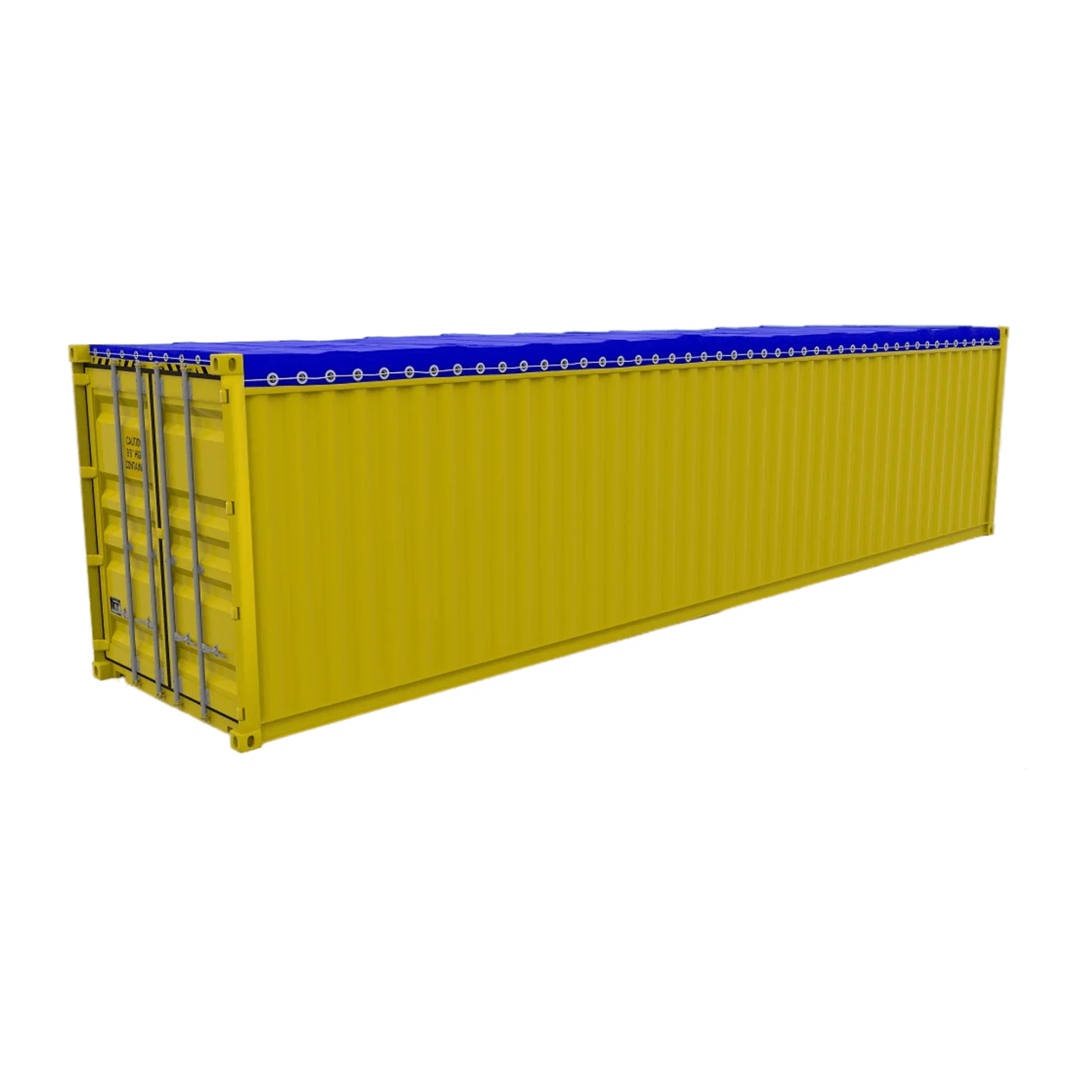
Open top shipping containers are designed for cargo that cannot be loaded easily through standard container doors. Instead of a permanent steel roof, they use removable roof bows and a weather-resistant tarpaulin cover.
This configuration allows machinery, construction materials and other oversized items to be lowered into the container using a crane or similar lifting equipment.
Open top containers are commonly available in 20ft and 40ft sizes. However, dimensions, payload ratings and roof-opening measurements can vary between manufacturers. Always confirm the specifications of the individual container before purchasing, transporting or loading it.
What Is an Open Top Shipping Container?
An open top shipping container has steel side walls, a cargo floor and standard doors similar to a general-purpose container. The primary difference is its removable roof system.
The roof normally consists of:
- Removable or movable steel roof bows
- A reinforced tarpaulin cover
- Tarpaulin ropes or securing cables
- Lashing points
- A removable or movable door header on some models
Once the tarpaulin and roof bows are removed, cargo can be loaded vertically through the top.
CMA CGM’s container specifications describe open top units as general-purpose-style containers without a rigid roof. They may use removable covers, roof bows and removable headers above the cargo doors.
When Should You Choose an Open Top Container?
An open top container may be appropriate when the cargo:
- Is too tall to pass through standard cargo doors
- Must be loaded using a crane
- Cannot be moved safely through the end doors
- Requires vertical access during loading or unloading
- Has an unusual shape
- Needs protection from the sides while remaining accessible from above
- Can fit between the container’s side walls but exceeds the normal door height
Open top containers are particularly useful for equipment and materials that are difficult to load with a forklift.
If the cargo is also wider than the container or extends beyond its side walls, a flat rack may be more appropriate. Review our flat rack shipping container guide before deciding.
Common Uses for Open Top Shipping Containers
Heavy Machinery
Industrial machines, generators, pumps and manufacturing equipment may be too tall or difficult to maneuver through regular container doors.
A crane can lower the equipment into the container while the roof bows and tarpaulin are removed.
Construction Materials
Open top containers can be used for selected construction materials, including:
- Steel components
- Pipes
- Precast products
- Glass panels
- Timber
- Building equipment
- Fabricated metal structures
The container provides steel side protection while permitting overhead loading.
Scrap Metal and Recyclable Materials
Some open top containers are used for scrap metal and other loose materials that can be loaded from above.
The container must still be suitable for the weight and characteristics of the material. Sharp or shifting cargo may damage the walls, floor or tarpaulin if it is not properly contained and secured.
Stone, Marble and Industrial Components
Dense materials such as stone, marble and fabricated industrial parts can require specialized loading.
Their total weight may become the limiting factor before the container’s available space is filled. The cargo weight must therefore be calculated before loading.
Oversized Project Cargo
Open top containers can support selected project-cargo movements where the load exceeds standard container height but remains suitable for the open top’s internal width, floor and structural capacity.
The carrier or transportation provider should review the cargo’s:
- Length, width and height
- Total weight
- Center of gravity
- Lifting points
- Support requirements
- Securing plan
- Amount of over-height projection
Cargo that extends above the normal container profile may be classified as out-of-gauge cargo and can require special transportation arrangements.
20ft vs 40ft Open Top Containers
The right size depends on the cargo’s measurements, weight distribution, loading method and transportation requirements.
20ft Open Top Container
A 20ft open top container may suit:
- Compact heavy machinery
- Dense construction materials
- Smaller industrial equipment
- Projects with limited placement space
- Loads that require a shorter lifting area
Because dense cargo can reach a container’s weight limit quickly, a 20ft unit may be practical even when the cargo does not occupy its entire internal volume.
40ft Open Top Container
A 40ft open top container provides more floor length for:
- Long machinery
- Steel components
- Pipes
- Timber
- Fabricated structures
- Multiple pieces of equipment
The additional length does not mean that every type of heavy cargo can be loaded safely. Weight distribution across the floor remains important.
Before choosing a size, compare the approximate measurements in our shipping container dimensions, weight and capacity guide.
Standard Container vs Open Top Container
A standard dry container has a fixed steel roof and cargo doors at one end. It is usually the more economical option for cargo that fits through the doors and does not require overhead loading.
An open top container provides vertical loading access but requires additional inspection and maintenance of its roof bows, tarpaulin and securing system.
Choose a standard container when:
- The cargo fits through the end doors
- Overhead loading is unnecessary
- Maximum weather protection from a rigid steel roof is preferred
- A lower-cost general storage solution is sufficient
Choose an open top container when:
- The cargo must be loaded from above
- The cargo exceeds the regular door-opening height
- Crane access will make loading safer or more practical
- The load fits within the container’s side walls and structural limits
Open Top Container vs Flat Rack Container
Open top and flat rack containers can both handle specialized cargo, but their structures are different.
An open top container retains its steel side walls and end doors. This gives the cargo more side protection and enclosure.
A flat rack generally has no permanent side walls or roof. It is better suited to cargo that exceeds standard width or needs to be loaded from the side.
Consider an open top container when the load is primarily over-height but fits between the side walls.
Consider a flat rack when the load is:
- Over-width
- Extremely irregular
- Better loaded from the side
- Unable to fit between container walls
- Longer than the usable space of an open top
The final selection should be based on the complete cargo dimensions and the requirements of the carrier, crane operator and delivery provider.
Are Open Top Containers Waterproof?
Open top containers should not automatically be described as completely waterproof.
The tarpaulin is designed to provide weather protection when it is correctly fitted and secured. However, it does not function exactly like a permanent welded steel roof.
Water resistance depends on:
- Tarpaulin condition
- Correct placement of the roof bows
- Rope or cable tension
- Condition of the fastening points
- Tears, punctures or worn sections
- Cargo projecting above the roofline
- Wind and rain exposure
- Proper drainage around the container
A damaged, loose or incorrectly installed tarpaulin can allow water to enter.
If the container will be used for long-term storage, inspect the interior after rain and monitor for condensation. Sensitive furniture, documents and moisture-sensitive equipment may require additional protection.
How Are Open Top Containers Loaded?
The loading method depends on the cargo and equipment available.
Overhead Crane Loading
The roof bows and tarpaulin are removed before the cargo is lowered through the roof opening.
A qualified lifting team should plan the operation and confirm the lifting points, rigging equipment, load weight and center of gravity.
No person should stand underneath a suspended load.
Loading Through the Cargo Doors
Cargo that fits through the doors may still be loaded from the end using a forklift or other suitable equipment.
On models with a removable door header, removing the header may provide additional clearance. The header must be reinstalled and secured according to the container’s design.
Securing the Cargo
Heavy or oversized cargo must be prevented from moving during transportation.
The securing plan may involve:
- Rated chains
- Straps
- Blocking
- Bracing
- Timber supports
- Cradles
- Rated lashing points
- Load-distribution materials
Do not assume that the roof bows or tarpaulin can secure the cargo. They form part of the covering system and are not substitutes for a properly engineered restraint plan.
What to Inspect Before Buying an Open Top Container
Tarpaulin Condition
Check the entire cover for:
- Tears
- Holes
- Thin or brittle sections
- Damaged eyelets
- Failed seams
- Previous repairs
- UV deterioration
- Missing ropes or cables
Confirm that the tarpaulin is the correct size for the container.
Roof Bows
Make sure all required roof bows are present.
Inspect them for:
- Bending
- Corrosion
- Cracking
- Damaged attachment points
- Difficulty fitting into their correct positions
Missing or damaged roof bows can prevent the tarpaulin from being supported correctly.
Removable Door Header
If the container has a removable header above the cargo doors, verify that it:
- Fits correctly
- Locks securely
- Is not visibly bent
- Can be removed and reinstalled
- Has complete locking components
Doors and Gaskets
Open and close both doors.
Check the locking bars, hinges, handles and rubber gaskets. Difficult doors can indicate poor lubrication, uneven support or distortion in the container frame.
Roof Rail and Upper Frame
Inspect the top rails, corner posts and upper structural areas for impact damage, heavy corrosion or unauthorized alterations.
Damage near the roof opening can affect the container’s strength and the fit of the covering system.
Floor
Inspect the floor for:
- Soft sections
- Delamination
- Chemical staining
- Strong odors
- Cracks
- Holes
- Previous repairs
- Damage from concentrated loads
Ask whether the floor is suitable for the equipment or materials you intend to store.
Interior
Stand inside the empty container with the doors closed during daylight. Look for visible light entering through unexpected holes or damaged areas.
Remember that this test does not evaluate the tarpaulin’s performance during rain.
Identification and Rating Plates
Confirm that the container identification markings are legible. If the container will be used for international transportation, ask whether its safety approval and inspection status meet the carrier’s requirements.
A container suitable for stationary storage is not automatically approved for international shipping.
Delivery and Site Preparation
Open top containers require the same careful delivery planning as other container types.
Before delivery:
- Confirm the container’s external dimensions
- Prepare a firm and level foundation
- Check truck access
- Remove overhead obstructions
- Confirm the required door orientation
- Provide enough unloading space
- Check for trees, buildings and power lines
- Confirm whether a crane or tilt-bed truck will be used
Because open top containers are frequently associated with tall equipment, check both the delivery route and the final site for overhead clearance.
Review Cargo Vault’s shipping container delivery information before preparing the location.
Can an Open Top Container Be Used for Storage?
Yes, but it is best suited to storage applications where overhead access is genuinely useful.
Before using one for long-term storage, consider:
- Weather exposure
- Tarpaulin maintenance
- Security
- Ventilation
- Condensation
- Frequency of access
- Type of stored goods
- Availability and cost of replacement covers
A standard dry or High Cube container may be more economical when the goods fit through the cargo doors.
If additional internal height is required but overhead loading is unnecessary, compare the available options in our High Cube shipping container guide.
Questions to Ask Before Buying
Ask the seller:
- Is the container 20ft or 40ft?
- What are its exact internal and external dimensions?
- What is the usable roof-opening size?
- What is its tare weight and maximum gross weight?
- Are all roof bows present?
- Is the tarpaulin included?
- Has the tarpaulin been repaired?
- Does the removable door header work correctly?
- Are the doors and gaskets in good condition?
- Is the floor suitable for the intended load?
- Has the upper frame sustained impact damage?
- Is the container intended for storage or transportation?
- Can current photographs and an inspection report be provided?
- What equipment will be used for delivery?
- Is specialized lifting required at the destination?
Frequently Asked Questions
Does an Open Top Container Have a Roof?
It does not have a permanent rigid steel roof. It normally uses removable roof bows and a flexible tarpaulin cover.
Can Cargo Extend Above the Container?
Certain transportation arrangements may allow over-height cargo, but the carrier must review and approve the dimensions, weight, lifting plan and securing requirements.
Are Open Top Containers Available in 20ft and 40ft Sizes?
Yes. These are the most common sizes, although availability and exact specifications vary.
Can an Open Top Container Be Stacked?
An empty or properly configured open top container may retain standard corner castings, but stacking and transportation requirements depend on its design, condition, cargo and applicable operating rules. Obtain professional confirmation before attempting to stack loaded units.
Is an Open Top Container More Expensive?
It can cost more than a standard dry container because it is specialized equipment and may have lower availability. Condition, size, location and delivery requirements also affect the price.
Is an Open Top Container Suitable for a Home Conversion?
It is usually selected for specialized cargo rather than residential conversion. A standard or High Cube container may provide a more practical starting point because it has a permanent steel roof.
Choose the Container According to the Cargo
An open top shipping container is valuable when cargo must be loaded from above or cannot pass easily through standard cargo doors.
Before purchasing, measure the cargo carefully and confirm:
- Overall dimensions
- Weight
- Center of gravity
- Loading method
- Roof-opening clearance
- Floor capacity
- Securing requirements
- Delivery access
If the cargo exceeds the container’s width as well as its height, compare an open top with a flat rack before making your decision.
Request a Cargo Vault quote with the cargo dimensions, weight, delivery location and intended use so the available container options can be reviewed.