
Shipping Container Door Dimensions: Will Your Cargo and Equipment Fit?
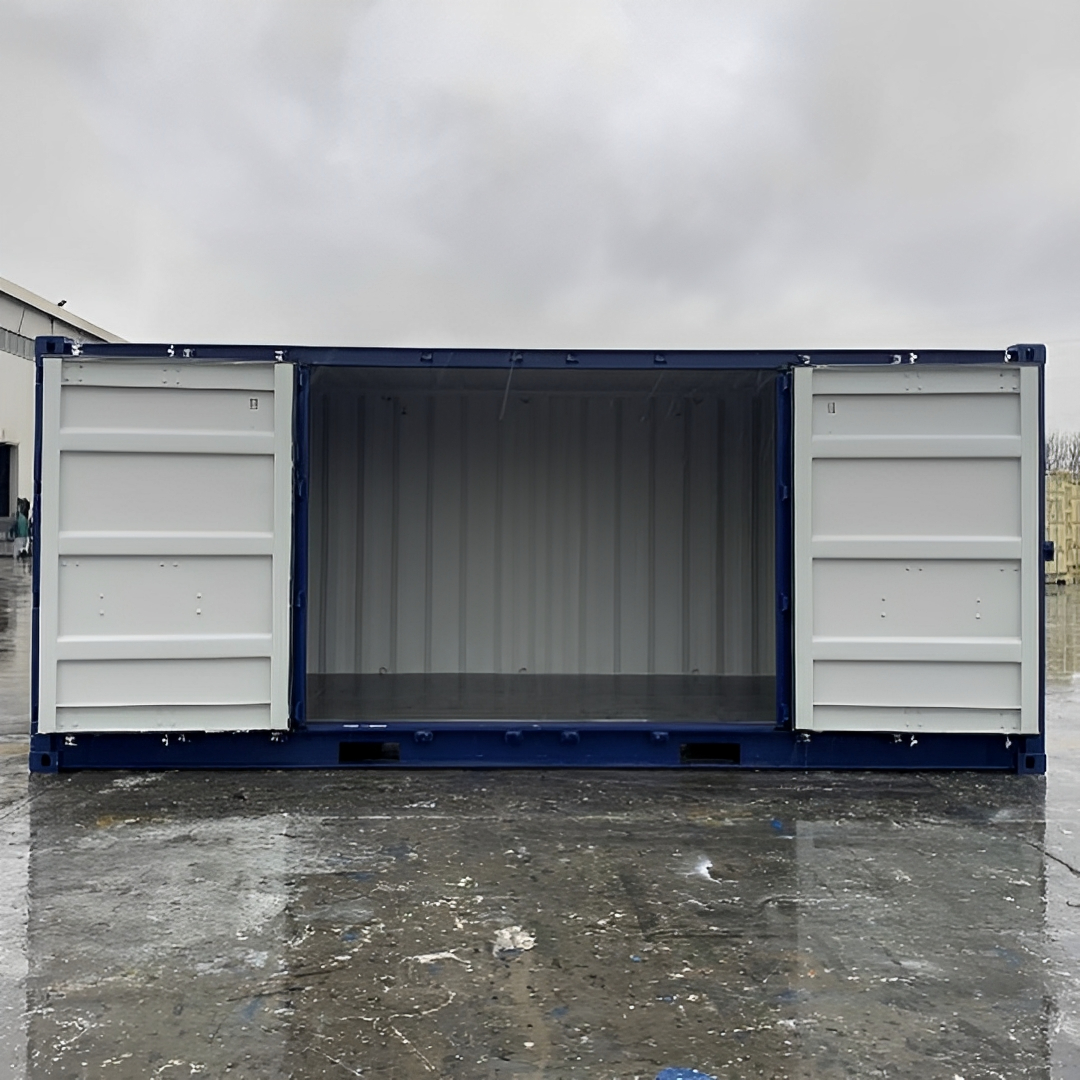
Compare standard and High Cube shipping container door dimensions and learn how to measure vehicles, pallets and equipment before loading.
A shipping container may be described as 8 feet wide, but that does not mean an 8-foot-wide item can pass through its doors. The advertised width is an exterior measurement. Corner posts, the door frame, hinges, seals and the upper header reduce the clear opening available for loading.
That difference matters when storing vehicles, machinery, palletized goods, workshop equipment or oversized inventory. An item can fit comfortably inside the container yet still be too wide or too tall to pass through the entrance.
This guide compares typical shipping container door dimensions and explains how to measure your cargo, loading equipment and site before ordering. For a broader comparison of exterior measurements, interior space, weight and capacity, begin with CargoVault’s complete shipping container dimensions guide.
Quick Answer: How Large Is a Shipping Container Door Opening?
Typical dry-container cargo doors are approximately 7 feet 8 inches wide. A standard-height 20ft or 40ft container commonly has a door opening around 7 feet 5 inches high, while a 40ft High Cube commonly provides a door opening around 8 feet 5 inches high.
Those figures are planning estimates—not a guarantee for every container. Published specifications vary by manufacturer, carrier, model and production series. Modifications, repairs, seals and door condition can also affect usable clearance.
Confirm the measurements of the actual unit before buying when your cargo is close to any limit.
Typical 20ft, 40ft and High Cube Door Dimensions
The table below uses representative steel dry-container specifications published by Maersk. Measurements for an individual CargoVault unit may differ.
| Container type | Exterior height | Approx. internal width | Approx. internal height | Typical door-opening width | Typical door-opening height |
| 20ft Standard | 8ft 6in / 2.591m | 7ft 8½in / 2.350m | 7ft 10 3/16in / 2.393m | 7ft 8 1/16in / 2.350m | 7ft 5½in / 2.274m |
| 40ft Standard | 8ft 6in / 2.591m | 7ft 8½in / 2.350m | 7ft 10 3/16in / 2.393m | 7ft 8 1/8in / 2.340m | 7ft 5½in / 2.274m |
| 40ft High Cube | 9ft 6in / 2.896m | 7ft 8½in / 2.350m | 8ft 10 1/8in / 2.697m | 7ft 8 1/8in / 2.340m | 8ft 5 7/16in / 2.577m |
| 45ft High Cube | 9ft 6in / 2.896m | 7ft 8 9/16in / 2.352m | 8ft 10 1/4in / 2.698m | 7ft 8 1/8in / 2.340m | About 8ft 5 3/4in / 2.585m |
Source: Maersk dry-container equipment specifications.
Variation between published specifications is normal. For example, Hapag-Lloyd lists a 2,340mm by 2,292mm door opening for one 20ft Standard container series, while its 40ft High Cube series lists 2,340mm by 2,597mm.
This is why a buyer should not treat one online chart as the final measurement for every container.
Door Opening vs Interior Dimensions
Three different measurements are often confused:
- Exterior width and height: The overall space occupied by the container.
- Interior width and height: The usable space between the inner walls, floor and ceiling.
- Clear door opening: The narrowest usable width and height through which cargo must pass.
For example, a representative 40ft Standard unit may have an internal height of approximately 7 feet 10 inches but a door-opening height of only about 7 feet 5 inches.
The container can therefore hold an object taller than the doorway only if there is another safe way to load it—which a standard enclosed dry container normally does not provide.
Always compare the largest item with the clear door opening first and the interior dimensions second.
How to Measure Cargo Before Loading
Measure the item in its complete loading condition. Packaging, pallets, wheels, handles, mirrors, lifting attachments and protective frames may increase its dimensions.
Use this process:
- Measure the item at its widest point, including all fixed protrusions.
- Measure its height while it is resting on the pallet, dolly, rollers or loading platform that will be used.
- Measure the full length and determine whether it can travel straight through the doorway.
- Add practical clearance so the item does not scrape the frame, seals, roof or walls.
- Identify how the item will cross the raised door threshold.
- Confirm that lifting equipment, ramps or forklift components also fit the loading path.
- Check the item’s weight and how that load will be distributed across the floor.
- Allow enough room to position, secure and later remove the item safely.
Do not order a container when the cargo measurement merely equals a published door measurement. Real loading requires clearance, and the actual opening may differ slightly from the chart.
Will a Vehicle Fit Through Shipping Container Doors?
Some cars and compact vehicles may fit inside a standard container, but the vehicle’s overall width and height are only the beginning of the assessment.
Check:
- Width with mirrors in their loading position
- Roof racks, antennas and other accessories
- Ground clearance at the ramp and raised threshold
- Space to open the vehicle doors after entry
- Safe access for the driver or loading operator
- Tie-down points and room around the vehicle
- Fuel, battery, ventilation and fire-safety requirements
- The total weight of the vehicle and loading equipment
A vehicle that passes through the cargo doors may leave too little room for someone to exit through a side door.
Professional vehicle loaders may use winches, wheel dollies or other methods, but the equipment and procedure must be appropriate for the vehicle and container.
Do not drive or winch a vehicle into a container without a safe loading plan. Obtain guidance from a qualified transporter, especially when the container will later be moved with the vehicle inside.
Loading Pallets, Machinery and Forklifts
Palletized goods should be evaluated using their loaded dimensions, not the pallet’s empty size. Cartons can overhang the deck, wrapping can add width, and stacked goods may be taller than expected.
Forklift loading introduces additional questions:
- Does the loaded pallet pass through the doorway with clearance?
- Does the forklift mast or overhead guard clear the upper frame?
- Can the forklift approach the entrance straight and on stable ground?
- Is a dock, ramp or alternative loading system required?
- Can the container floor safely handle the equipment and concentrated wheel loads?
- Is there enough interior room to turn or withdraw the forks?
Container payload capacity alone does not answer every floor-loading question. Heavy machines, narrow wheels and concentrated supports can place substantial force on a small area.
Use a qualified loading professional or engineer when handling unusually heavy equipment.
When a High Cube Container Solves the Problem
A High Cube container is approximately one foot taller externally than a standard unit. Its doorway is also commonly close to one foot taller, making it useful for tall machinery, higher pallet stacks, shelving systems and conversions that need ceiling clearance.
However, a High Cube does not normally give you a wider end-door opening. If width is the problem, additional height will not solve it.
Review CargoVault’s High Cube shipping container guide, then compare available High Cube containers.
When You Need a Different Door Configuration
If conventional end doors do not suit the cargo or frequency of access, consider a different container configuration.
Open-Side Containers
An open-side container provides access along a long wall, making it easier to reach several storage zones and load wide or awkward items from the side.
Exact side-opening dimensions vary by model, so obtain the product specification before ordering. Compare the practical differences in CargoVault’s open-side vs standard container guide.
Double-Door or Tunnel Containers
A double-door container provides cargo doors at both short ends. It improves access and stock rotation, but it does not necessarily provide a wider individual doorway.
Read the double-door shipping container guide before choosing this configuration.
Roll-Up Doors
Roll-up doors can be useful for frequent pedestrian access, tools, retail inventory and partitioned storage. The frame and door assembly determine the clear opening, so a modified unit must be measured after installation.
CargoVault’s roll-up-door container buying guide explains the main tradeoffs.
Open-Top Containers and Flat Racks
Open-top containers support loading from above when cargo cannot pass through conventional end doors. Flat racks are designed for selected oversized and irregular loads that require open sides.
Loading, securing and transportation requirements are specialized. Work with qualified professionals and confirm the specifications of the actual equipment.
Door Clearance Outside the Container Also Matters
Correct cargo measurements do not help if the doors cannot open fully at the placement site. Allow adequate clear space in front of the unit and around any doors that fold back along the sides.
The container should sit on a firm, level and well-drained base. Twisting or uneven support can make cargo doors difficult to operate even when they were functioning correctly before delivery.
Keep walls, fences, parked vehicles, slopes and stored materials away from the door path.
Review CargoVault’s site-preparation checklist and delivery information before selecting the final location.
Which Container Access Style Should You Choose?
| Your main requirement | Configuration to consider | What to confirm |
| General boxed goods and household storage | Standard cargo doors | Largest item fits the end opening |
| Tall machinery or higher shelving | High Cube | Door height and internal height |
| Direct access along the container’s length | Open-side | Exact side-opening size and exterior clearance |
| Access from either end | Double-door or tunnel | Door operation, seals and internal layout |
| Frequent access to smaller items | Roll-up-door modification | Finished clear opening and security |
| Over-height or irregular cargo | Open-top or flat rack | Loading, securing and transport requirements |
The best option is determined by the entire loading process—not only by the amount of storage space available.
Door-Dimension Checklist Before You Order
Before purchasing, confirm:
- Clear door-opening width and height of the actual unit
- Internal width, height and length
- Dimensions of the largest loaded item
- Added size from pallets, packaging or attachments
- Required maneuvering and safety clearance
- Ramp, dock, forklift, crane or winch requirements
- Threshold height and ground conditions
- Cargo weight and floor-load distribution
- Space for opening the doors at the site
- Need for standard, High Cube, open-side, double-door or modified access
Photographs are useful, but they do not replace written measurements when the fit is close.
Frequently Asked Questions
Are 20ft and 40ft Shipping Container Doors the Same Size?
Their end-door openings are often very similar, but dimensions can vary by container series and manufacturer. Do not assume that measurements from one 20ft or 40ft model apply to every other unit.
Is a Shipping Container Door 8 Feet Wide?
No. A standard container is generally 8 feet wide externally, while the clear cargo-door opening is commonly around 7 feet 8 inches wide.
How Tall Is a High Cube Container Door?
A representative 40ft High Cube door opening is approximately 8 feet 5 inches high. Some published series are closer to 8 feet 6 inches, so confirm the exact unit.
Can I Widen Shipping Container Doors?
A container can be professionally modified, but cutting its frame or walls can affect structure, weather resistance, security and intended certification.
A purpose-built open-side unit may be more suitable. Modifications should be designed and completed by qualified professionals.
Can I Rely on Dimensions Found Online?
Online charts are useful for initial planning. When cargo is close to the limit, request the manufacturer’s specification for that series or physically measure the clear opening of the actual container.
Should I Measure the Container Before Delivery?
Yes, particularly when storing a vehicle, machine or other item with limited clearance. Also confirm that the delivery location provides enough space to open and use the doors safely.
Confirm the Opening Before Choosing the Container
The safest purchasing decision begins with the largest item that must enter the container. Measure that item in its complete loading condition, compare it with the actual clear door opening and leave practical clearance for safe movement.
A standard container may be ideal for general storage, a High Cube may solve a height restriction, and an open-side or modified configuration may be better when width or frequent access is the priority.
Request a custom quote from CargoVault Containers and include the delivery ZIP code, intended use, largest cargo dimensions and preferred loading method. The team can help you compare container sizes and access configurations available for your project.