
Steel Cabins vs Shipping Containers: Which Portable Building Is Right for You? Slug: steel-cabins-vs-shipping-containers-comparison
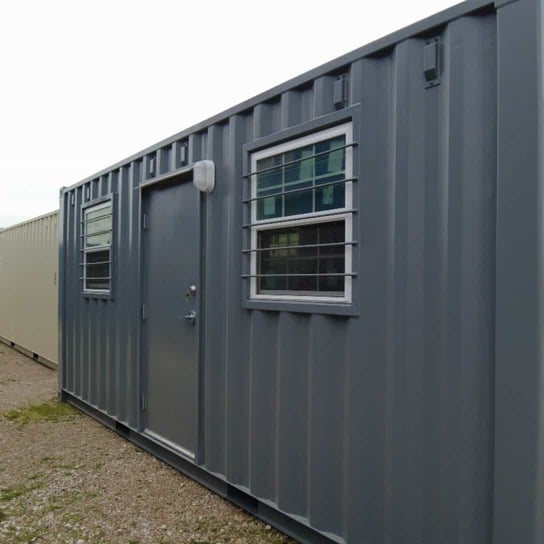
Compare steel cabins and shipping containers to determine which option better suits your office, storage or welfare requirements.
Steel cabins and shipping containers can both provide secure, relocatable space. However, they are designed for different purposes and should not automatically be treated as interchangeable.
A steel cabin is generally designed around people, interior comfort and regular occupancy. A shipping container is originally designed for cargo transport and is commonly selected for robust storage, equipment protection and conversion projects.
Understanding the differences in access, insulation, security, delivery and modification requirements will help you select the right option for storage, office accommodation or site facilities.
Quick Answer: Steel Cabin or Shipping Container?
Choose a steel cabin when you need a finished office, canteen, changing room, reception area or regularly occupied workspace.
Choose a shipping container when secure storage, large cargo access, structural strength or a customizable steel shell is the main priority.
Both can be modified, relocated and secured, but the most economical choice is usually the structure already designed closest to your intended use.
What Is a Steel Cabin?
A steel cabin is a portable building designed for uses such as offices, canteens, stores, changing rooms and welfare facilities.
Many steel cabins include:
- Personnel doors
- Windows
- Insulation
- Interior wall and ceiling finishes
- Electrical systems
- Lighting
- Heating or cooling options
- Finished flooring
Anti-vandal models may provide additional protection through steel shutters, reinforced doors and limited external access points. These features can be valuable on exposed or unattended sites.
Browse CargoVault’s steel cabin category to compare available portable-building configurations.
What Is a Shipping Container?
A shipping container is a strong steel unit originally designed for cargo handling and transportation. Its corrugated walls, cargo doors, corner posts and robust frame make it particularly useful for heavy-duty storage.
Standard shipping containers are generally supplied as empty steel units unless modifications are included. Buyers planning to use one as an office or occupied room may need insulation, ventilation, windows, personnel doors, electrical systems and interior finishes.
CargoVault offers 20ft shipping containers, 40ft shipping containers and professional container modification options.
Steel Cabins vs Shipping Containers: Main Differences
| Requirement | Steel cabin | Shipping container |
| Primary purpose | Offices and occupied site facilities | Cargo transport and secure storage |
| Standard access | Personnel doors and windows | Large cargo doors |
| Interior comfort | Often supplied with insulation and finishes | Usually requires conversion |
| Heavy-equipment storage | Depends on the cabin specification | Frequently suitable |
| Office use | Designed for this purpose | Requires appropriate modification |
| Relocation | Designed as a portable building | Relocatable with suitable equipment |
| Security | Strong, especially anti-vandal models | Robust construction with suitable locks |
| Cargo loading | Limited by personnel-door dimensions | Large end doors support bulky items |
| Interior appearance | Often finished before delivery | Usually industrial unless converted |
| Stacking | Depends on the cabin’s design | Possible for suitable units under professional planning |
| Weather resistance | Depends on construction and maintenance | Designed for outdoor freight service, but condition varies |
| Modification flexibility | Can be configured for welfare or office use | Can be converted for storage, work or commercial use |
Choose a Steel Cabin When Comfort Matters
A steel cabin may be the better choice when employees, contractors or visitors will occupy the space regularly.
Common applications include:
- Site offices
- Canteens and break rooms
- Reception rooms
- Meeting spaces
- Changing rooms
- Drying rooms
- Security offices
- Classrooms
- Temporary healthcare or consultation rooms
- Combined office and welfare units
Because many models are already configured for occupancy, less conversion work may be required. A cabin with suitable insulation, windows, lighting and electrical systems can often be placed into service faster than an unmodified shipping container.
Buyers should still confirm the cabin’s specifications, utility connections and compliance with local workplace, accessibility, fire and building requirements.
Choose a Shipping Container for Heavy-Duty Storage
A shipping container may be preferable when the main requirement is protecting equipment, tools, building materials or commercial inventory.
The large cargo doors make loading bulky items easier, while the structural frame is designed for demanding handling conditions.
Common storage applications include:
- Construction tools and materials
- Farm equipment and supplies
- Landscaping machinery
- Commercial inventory
- Workshop equipment
- Replacement parts
- Household contents
- Event equipment
- Seasonal stock
- Rental equipment
A container can also become an office, workshop or commercial space, but appropriate insulation, ventilation, utilities and interior finishing will normally be necessary.
CargoVault’s shipping container office guide explains the main planning considerations for office conversions.
Compare Access and Door Requirements
Steel cabins normally use personnel doors designed for people entering and leaving. Shipping containers commonly have large double cargo doors at one short end.
Choose according to what must move through the opening.
A personnel door may be sufficient for:
- Office furniture
- Documents
- Computers
- Small equipment
- Employee access
- Welfare supplies
Cargo doors may be more suitable for:
- Palletized goods
- Machinery
- Construction materials
- Large shelving units
- Workshop equipment
- Bulky household contents
If frequent side access is required, a shipping container can be fitted with additional personnel doors, roll-up doors or other professionally framed openings.
Review CargoVault’s shipping container door-dimensions guide before ordering when equipment must pass through a specific opening.
Insulation, Ventilation and Interior Comfort
Steel conducts heat, so both steel cabins and shipping containers require an appropriate interior-comfort plan when people will occupy them.
Depending on the climate and intended use, consider:
- Wall and ceiling insulation
- Floor insulation
- Heating and air conditioning
- Passive or powered ventilation
- Condensation control
- Interior wall finishes
- Natural and artificial lighting
- Electrical outlets
- Emergency exits
- Fire-safety equipment
Many steel cabins already include some of these features. A standard shipping container normally requires additional conversion work.
Do not assume that adding a window and personnel door automatically makes a container suitable for continuous occupancy. The completed unit should meet applicable building, workplace, electrical, fire and accessibility requirements.
Compare Security Requirements
Both options can provide good security when correctly specified.
Consider:
- Door construction
- Locking points
- Window protection
- Exterior lighting
- Alarm systems
- Security cameras
- Location and visibility
- Frequency of occupancy
- Value of stored equipment
- Access control
- Emergency escape requirements
An anti-vandal steel cabin may include protected windows and reinforced personnel doors. A shipping container has robust steel walls and cargo doors, but suitable locks and a lockbox may still be required.
CargoVault’s site security and safety category can support a broader protection plan. You can also review the guide on how to secure a shipping container against theft.
Consider Jackleg Cabins
A jackleg cabin offers another alternative when portability, interior comfort and site accommodation are important.
Jackleg cabins are elevated on adjustable steel supports. These supports can help level the building on suitable prepared ground and may reduce the need for a full permanent foundation.
Common uses include:
- Construction-site offices
- Canteens
- Changing rooms
- Drying rooms
- Meeting spaces
- Temporary classrooms
- Welfare facilities
Jackleg cabins should still be installed on appropriate supports according to the supplier’s requirements. Ground conditions, access, stability and utility connections must be considered.
Read CargoVault’s jackleg cabin and site-accommodation guide for additional information.
Portable Cabin vs Modular Building
A single steel cabin may be sufficient for a small office or welfare facility. Larger operations may require connected or stacked modules that create several rooms.
A modular building may be more appropriate when the project requires:
- Multiple offices
- Corridors
- Reception areas
- Toilets and changing facilities
- Training rooms
- Separate staff areas
- Larger open-plan workspaces
CargoVault’s guide to modular container buildings explains how several units can support larger temporary or permanent space requirements.
Durability and Maintenance
Both steel cabins and shipping containers require regular inspection and maintenance.
For steel cabins, check:
- Roof condition
- Exterior panels
- Windows and doors
- Floor condition
- Interior finishes
- Electrical systems
- Supports and levelling
- Sealants and drainage
For shipping containers, check:
- Roof and wall corrosion
- Cargo-door operation
- Rubber seals
- Locking bars and hinges
- Welded repairs
- Corner posts and castings
- Floor condition
- Evidence of condensation or leakage
A shipping container’s previous cargo history and condition grade should be considered before it is used for sensitive storage or an occupied conversion.
Delivery and Site Requirements
Before ordering either structure, confirm:
- External length, width and height
- Delivery-truck access
- Gate and road width
- Ground conditions
- Support or foundation requirements
- Utility connections
- Overhead power lines and branches
- Door-opening space
- Crane or lifting requirements
- Local planning requirements
- Future relocation plans
The final surface should be firm, level and adequately drained.
Steel cabins and modified containers may require crane placement, while some standard containers can be delivered using tilt-bed equipment. The correct delivery method depends on the unit, site and final position.
Review CargoVault’s delivery information and shipping container site-preparation checklist before selecting the placement area.
Cost Considerations
The lowest initial price may not represent the lowest completed-project cost.
When comparing steel cabins and shipping containers, include:
- Purchase price
- Delivery and placement
- Foundation or supports
- Insulation
- Windows and personnel doors
- Electrical installation
- Heating and cooling
- Interior finishes
- Security equipment
- Planning and permit costs
- Future relocation
- Maintenance
A steel cabin may initially cost more than a basic shipping container but require fewer changes for office use.
A shipping container may provide better value for heavy-duty storage but become more expensive if extensive occupancy modifications are required.
Compare the fully completed configuration rather than only the price of the empty unit.
Steel Cabin or Shipping Container Decision Guide
| Your main requirement | Option to consider |
| Finished site office | Steel cabin |
| Canteen or welfare room | Steel or jackleg cabin |
| Secure tool and equipment storage | Shipping container |
| Large cargo-door access | Shipping container |
| Regular employee occupancy | Steel cabin or professionally converted container |
| Anti-vandal office accommodation | Anti-vandal steel cabin |
| Heavy machinery storage | Shipping container |
| Several connected rooms | Modular building |
| Temporary classroom or meeting space | Steel or jackleg cabin |
| Custom workshop | Modified shipping container or steel cabin |
| Future cargo transportation | Suitable certified shipping container |
| Frequent relocation | Compare lifting, transport and foundation requirements for both |
Questions to Ask Before Ordering
Before choosing a portable building, ask:
- Will the unit mainly store goods or accommodate people?
- How many people will use it?
- What equipment must pass through the doors?
- Is insulation already included?
- What ventilation or climate control is required?
- Are electrical systems included?
- What security level is needed?
- Can the delivery truck or crane reach the site?
- What foundations or supports are required?
- Will the unit be relocated later?
- What local planning and building rules apply?
- What is included in the written quotation?
Frequently Asked Questions
Is a steel cabin the same as a shipping container?
No. A steel cabin is generally designed as a portable building for offices or welfare facilities. A shipping container is originally designed for cargo handling and secure transportation.
Can a shipping container be used as an office?
Yes, but it normally requires appropriate insulation, ventilation, electrical work, windows, personnel doors and interior finishing. Local building and workplace requirements must also be considered.
Are steel cabins secure?
Steel cabins can provide strong security, particularly anti-vandal models with protected windows and reinforced doors. The appropriate security level depends on the location and intended use.
Which option is better for storing machinery?
A shipping container may be more suitable because of its large cargo doors and robust steel structure. Confirm the machine’s dimensions, weight and loading method before ordering.
Do steel cabins need foundations?
They require suitable support according to their design and the ground conditions. Jackleg cabins may use adjustable steel supports, while other cabins may require prepared pads or another foundation system.
Can steel cabins and containers be relocated?
Yes, both can be relocated using suitable lifting and transportation equipment. Disconnect utilities and obtain professional guidance before moving an occupied or modified unit.
Which option is less expensive?
It depends on the completed project. A basic shipping container may cost less initially, while a steel cabin may require fewer modifications for regular occupancy.
Choose According to the Main Purpose
Choose a steel cabin when you primarily need a finished office, canteen, changing room or occupied facility.
Choose a shipping container when strong storage, large cargo access and a durable customizable shell are the main priorities.
Consider a jackleg cabin or modular building when the project requires more specialized site accommodation.
Request a custom quote from CargoVault Containers to compare available steel cabins, shipping containers and portable-building configurations.