
What Size Shipping Container Do I Need? A Simple Buyer’s Guide
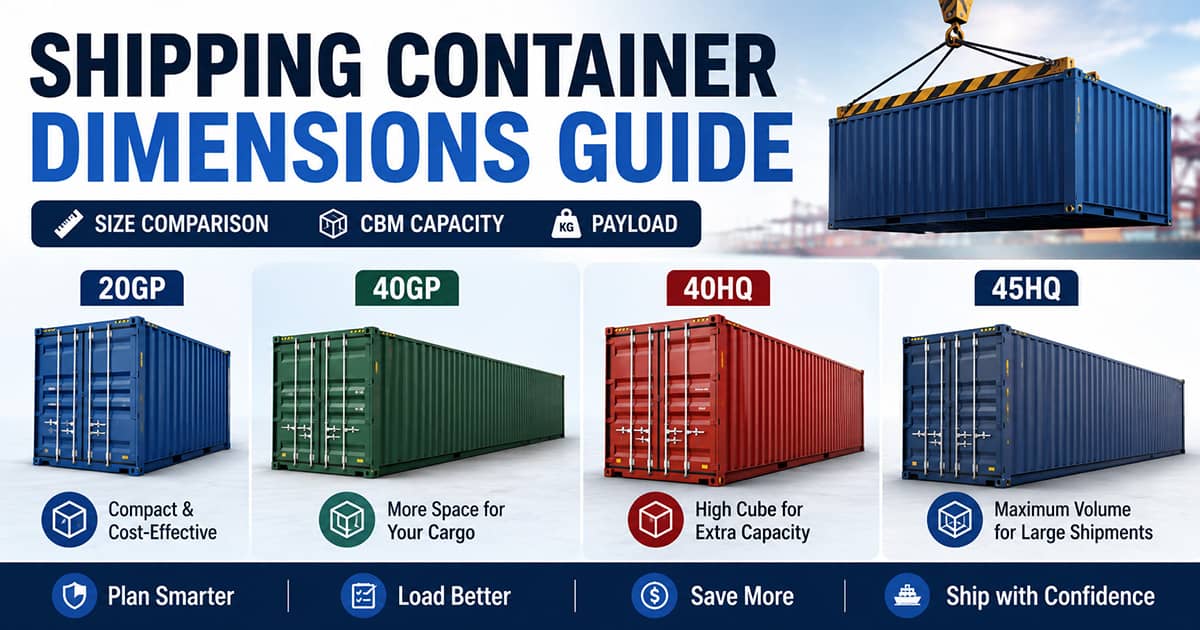
Not sure what size shipping container you need? Compare 10ft, 20ft, 40ft and High Cube containers to find the right option for your storage or project.
Choosing the right shipping container size involves more than estimating how much space your belongings will occupy. The container must also fit your property, accommodate your largest items and leave enough room for safe delivery and everyday access.
Buying a container that is too small may force you to rent additional storage later. Choosing one that is unnecessarily large can increase the purchase price, delivery requirements and amount of land needed.
This guide compares the most common shipping container sizes and explains how to select one based on your storage needs, property and intended use.
Quick Answer: Which Shipping Container Size Is Right for You?
The best size depends on what you are storing and how you intend to use the container:
- A 10ft container is suitable for tools, seasonal belongings and storage on smaller properties.
- A 16ft container offers more capacity than a 10ft unit without occupying the space required by a 20ft container.
- A 20ft container is a practical all-purpose option for household storage, equipment and small-business inventory.
- A 30ft container provides a middle ground between 20ft and 40ft units.
- A 40ft container is better for large inventories, vehicles, construction equipment and conversion projects.
- A 40ft High Cube provides the same floor area as a standard 40ft container but approximately one additional foot of exterior height.
- A 45ft High Cube is suitable when maximum capacity is required and the property can accommodate its size and delivery needs.
For exact external and internal measurements, review our shipping container dimensions, weight and capacity guide.
Shipping Container Size Comparison
All measurements are approximate. Interior dimensions, door openings and payload limits can vary according to the manufacturer, age and modifications made to the container.
| Container size | Approximate exterior dimensions | Approximate footprint | Common uses |
| 10ft standard | 10ft × 8ft × 8ft 6in | 80 sq. ft. | Tools, seasonal items and limited-space storage |
| 16ft standard | 16ft × 8ft × 8ft 6in | 128 sq. ft. | Equipment, business stock and medium storage needs |
| 20ft standard | 20ft × 8ft × 8ft 6in | 160 sq. ft. | Household goods, tools, machinery and inventory |
| 30ft standard | 30ft × 8ft × 8ft 6in | 240 sq. ft. | Commercial stock, workshops and larger equipment |
| 40ft standard | 40ft × 8ft × 8ft 6in | 320 sq. ft. | Large inventories, vehicles and construction materials |
| 40ft High Cube | 40ft × 8ft × 9ft 6in | 320 sq. ft. | Tall equipment, conversions and high-volume storage |
| 45ft High Cube | 45ft × 8ft × 9ft 6in | 360 sq. ft. | Maximum-capacity commercial and industrial storage |
The interior is always slightly smaller than the exterior because of the walls, frame, doors and flooring. Measure your widest and tallest items before making a decision.
Start With an Inventory of What You Need to Store
Before comparing container sizes, create a list of everything that will go inside. Record the approximate dimensions of your largest items, including machinery, furniture, vehicles, pallets and shelving.
Consider the following questions:
- What is the largest item that must pass through the doors?
- Will goods be stored loose, boxed, stacked or placed on pallets?
- Do you need an aisle through the middle?
- Will items be removed frequently?
- Do the doors need to open fully?
- Will shelving or workbenches be installed?
- Are your storage requirements likely to increase?
A container may appear large enough based on total volume but still be unsuitable if an oversized item cannot pass through its door opening. Frequently accessed storage also requires clear walking space rather than filling every available square foot.
When a 10ft Shipping Container Is Enough
A 10ft container can work well when space is limited and the storage requirement is relatively small. It is commonly used for tools, landscaping equipment, renovation materials, seasonal belongings and compact business inventory.
Consider a 10ft container when:
- Your property cannot accommodate a longer unit.
- You need secure storage close to a house or workplace.
- The container will hold tools or a limited amount of inventory.
- You want to separate valuable equipment from general storage.
- You need a unit that can fit into a restricted placement area.
Although the unit is compact, the delivery vehicle still needs sufficient space to enter, maneuver and unload. Read our complete 10ft shipping container guide before choosing this option.
When to Consider a 16ft or 30ft Container
A 16ft or 30ft container may be useful when standard sizes do not match the available site or required capacity.
A 16ft container provides more room than a 10ft unit while remaining easier to position than a full 20ft container. It can suit medium-sized equipment, building materials or business inventory.
A 30ft container offers substantially more capacity than a 20ft unit without requiring the entire footprint of a 40ft container. It may be appropriate for workshops, commercial storage or properties where a 40ft unit will not fit comfortably.
These sizes are often produced by professionally shortening larger containers, so availability, structural details and specifications can vary. Learn more in our 30ft shipping container guide.
Why a 20ft Container Is the Most Versatile Choice
A 20ft container offers a useful balance between capacity, cost and delivery accessibility. It is large enough for many residential and commercial applications but considerably easier to position than a 40ft unit.
Common uses include:
- Household furniture and boxed belongings
- Construction tools and materials
- Landscaping and agricultural equipment
- Small-business inventory
- Workshop equipment
- Motorcycle or vehicle storage
- Renovation and moving storage
A 20ft container may be the right choice if you need meaningful storage capacity but have limited land or delivery access. It is also easier to divide into shelving, equipment and walking areas without creating an excessively large storage space.
Before storing a vehicle, compare its width and height with the container’s interior and door-opening dimensions. Space must also remain for safely entering, exiting and inspecting the vehicle.
When a 40ft Container Makes More Sense
A 40ft container provides twice the floor area of a 20ft unit. It is suitable for businesses, farms, construction projects and customers storing large quantities of equipment or inventory.
Consider a 40ft container when:
- A 20ft container cannot hold your current inventory.
- You expect your storage needs to grow.
- You need space for multiple pallets or large equipment.
- The container will become a workshop or modified building.
- Your property has adequate placement and delivery space.
- You need separate storage and working areas inside one unit.
However, a larger container is not automatically the better choice. It requires more level ground and considerably more delivery access. If you are deciding between the two most common lengths, use our detailed 20ft versus 40ft shipping container comparison.
Should You Choose a High Cube Container?
A High Cube container is approximately one foot taller externally than a standard container. The additional interior height can be valuable even when the floor area remains unchanged.
High Cube containers are useful for:
- Tall equipment or machinery
- Stacked inventory
- Overhead shelving
- Workshops and offices
- Insulation and interior ceiling systems
- Electrical, ventilation or HVAC installations
- Residential and commercial conversions
The additional height provides greater flexibility, but you must check overhead clearance during delivery. Trees, utility lines, roof overhangs and gates can become obstacles.
Our High Cube shipping container guide explains when the additional height is worth considering.
When a 45ft Container Is Appropriate
A 45ft High Cube container is designed for buyers who need maximum capacity. It may be suitable for large commercial inventories, industrial equipment, agricultural storage or substantial conversion projects.
Before ordering a 45ft container, confirm:
- The complete unit fits within the placement area.
- The delivery vehicle can access and maneuver on the property.
- Sufficient space remains around the doors.
- The foundation can support the container properly.
- Local rules allow a structure of that size.
- The additional capacity will genuinely be used.
Because availability can vary by location, review the 45ft shipping container buying guide and confirm specifications before ordering.
Match the Container Size to Its Intended Use
Household storage
A 10ft unit may be enough for a limited number of boxes, tools and seasonal belongings. A 20ft container is more practical for larger household storage requirements.
The right choice depends on the amount and shape of your furniture rather than the number of rooms alone. Bulky sofas, appliances and mattresses can occupy space quickly.
Business inventory
Small businesses can often begin with a 20ft container. Businesses storing pallets, large stock quantities or equipment may require a 40ft unit.
Leave an aisle and organize frequently used inventory near the doors. A completely full container can be difficult to manage efficiently.
Construction and agricultural equipment
A 20ft container can hold tools, supplies and smaller machinery. Larger equipment or bulk materials may require a 40ft or 45ft container.
Check equipment width, height and weight rather than relying only on the container’s total capacity.
Vehicle storage
Many standard vehicles can fit inside a 20ft container, but the vehicle and door measurements must be checked first. A 40ft unit provides additional space for parts, tools or more than one small vehicle, subject to dimensions and safe loading.
Workshops and conversions
A 20ft container can become a compact workshop. A 40ft High Cube is generally more flexible when you need workbenches, insulation, electrical equipment and walking space.
Remember that wall framing and insulation reduce the usable interior dimensions.
Delivery Access Can Determine the Maximum Size
The container must reach the placement location before it can be useful. A large open area for the container does not automatically mean a delivery truck can access it.
Check for:
- Narrow roads, gates and driveways
- Tight corners and limited turning space
- Parked vehicles or nearby structures
- Trees and low branches
- Overhead power lines
- Soft, wet or sloping ground
- Fences and drainage channels
- Space for the doors to open
A 40ft or 45ft container normally requires substantially more delivery space than a 20ft unit. The exact requirement depends on the truck and unloading method used.
Review our shipping container delivery space requirements and confirm access with the delivery team before purchasing.
Prepare a Suitable Foundation
Shipping containers should rest on a firm, level and well-drained surface. Poor support can cause the frame to twist, making the cargo doors difficult to operate.
Possible foundation options include:
- Compacted gravel pads
- Concrete footings
- Concrete slabs
- Engineered piers
- Suitable support blocks
The appropriate option depends on the container size, ground conditions, intended use and local requirements. Compare the choices in our guide to the best foundations for shipping containers.
Do Not Choose a Container Based on Size Alone
Two containers with the same exterior dimensions can differ considerably in condition and configuration.
You should also decide whether you require:
- A new or one-trip container
- A used cargo-worthy container
- A wind-and-watertight storage container
- A standard or High Cube unit
- Doors at one or both ends
- Side-opening access
- An open-top or flat-rack design
- A refrigerated container
- Roll-up doors or other modifications
Use the shipping container buying checklist to review the container, quotation and delivery arrangements before placing an order.
Common Container-Size Mistakes
Buying the smallest possible container
A container that holds everything with no space remaining can be difficult to organize. Allow room for walking, ventilation, shelving and future storage.
Assuming a 40ft container offers the best value
A larger unit may appear more economical per square foot, but it can cost more to deliver, prepare and modify. It may also be unsuitable for smaller properties.
Using exterior dimensions for your calculations
Usable interior dimensions and door openings are smaller than the container’s exterior measurements.
Forgetting delivery access
The delivery truck needs more room than the container itself. Verify the route, turning space, ground conditions and overhead clearance in advance.
Ignoring future requirements
If your inventory is growing steadily, choosing a slightly larger container now may prevent another purchase later. However, avoid paying for space you are unlikely to use.
Final Checklist Before Choosing Your Size
Before requesting a quotation, confirm that you have:
- Listed and measured the items being stored
- Checked the largest item against the door opening
- Allowed room for aisles, shelving and ventilation
- Measured the available placement area
- Checked the complete delivery route
- Chosen between standard and High Cube height
- Considered future storage growth
- Selected an appropriate container condition
- Planned a stable, level foundation
- Confirmed local permit and placement requirements
- Requested a delivered quotation for your location
Frequently Asked Questions
What is the most popular shipping container size?
The 20ft container is one of the most widely selected sizes because it combines useful storage capacity with relatively manageable delivery and placement requirements.
Is a 20ft or 40ft container better?
A 20ft container is generally easier to position and is sufficient for many residential and small-business applications. A 40ft container is better when you need significantly more capacity and have adequate delivery and placement space.
Is a 10ft container large enough for household storage?
It can be suitable for boxes, tools, seasonal items and a limited amount of furniture. Create an inventory and measure bulky items before deciding.
Can a car fit inside a 20ft container?
Many cars can fit, but compatibility depends on the vehicle’s length, width and height. Check the container’s door opening and allow enough space to enter, exit and secure the vehicle safely.
Is a High Cube container worth buying?
A High Cube is useful when you need additional vertical storage or plan to install insulation, ceilings, utilities or ventilation. The extra height may be unnecessary for straightforward low-level storage.
Can I choose a larger container for future storage?
Yes, provided your property, delivery access and budget can accommodate it. Balance possible future growth against the higher purchase, delivery and site-preparation requirements.
Choose the Right Container With Confidence
The right shipping container should accommodate your belongings without creating unnecessary cost or delivery complications. Begin with an accurate inventory, measure your property and confirm truck access before selecting a size.